
Bar Soaps vs. Liquid
Bar Soaps = Nourishing
Bar Soaps = Moisturizing
Bar Soaps = Less Waste
Bar Soaps = Less Expense
There are a few reasons why we won’t offer liquid soaps, even though most people prefer the convenience… Let’s dive into why!

Bar Soaps vs. Liquid Soaps
To clarify, we are talking about pure, real soap. “Soap” is an FDA protected term! Some people assume surfactants or detergents are soap, but they’re NOT! Those are defined by the FDA as cosmetics. If it isn’t traditional, real soap it must be labeled differently. Other names of detergents include “wash”, “bar”. Some brands even have their brand name with “soap” in it to make it seem like a real soap product. This is very misleading. Most liquid “soaps” on the market are not technically soaps, but in fact detergents.
When we are talking about liquid vs. bar soaps in this article we are only referring to REAL soaps!
Soap-making involves chemistry, so here’s some scientific terms! Chemically speaking, liquid soaps need a different alkali (a highly basic pH substance) than bar soaps. This is to complete the saponification process. The saponification process turns oils to soap with an alkali (lye). Read our Why Lye Soap Article.
To recap, you can’t make any real soap without lye or another strong alkali substance. Lye is a natural product made from hardwood ashes filtered with water!
There are 2 forms of alkalis (lyes):
- Sodium Hydroxide forms bar soap using the cold process method (how we make soap) or the hot process method (explained below)
- Potassium Hydroxide forms liquid soap only using the hot process method – prolonged heat applied for several hours or more.
So, how does this change the nourishment quality, moisturization content, expense, and more?
Cold Process Bar Soaps Are More Nourishing
As mentioned above, liquid soap-making requires the hot process method – heating for hours at a time.
Hot process soap requires several hours of heating soap between 200-220°F!
Some soap-makers use the hot process method for the faster cure time. Curing time for cold-process soap takes 4-8 weeks, while hot-process soap takes 2-3 weeks. This makes hot-process soap is great for quicker sales, but it’s not beneficial for the nourishing content and quality.
If you aren’t familiar with heat factors and nutrient content: prolonged heat above 118°F destroys vitamins and proteins. This isn’t good for the nourishing aspect of our main soap ingredients: buttermilk and animal fats!
Make sure your bar soaps are made using the COLD process method (what we make). The cold process method only requires enough heat to melt the fats for a very short period of time.

Bar Soaps Are More Moisturizing
“Superfat” is a term used by soapmakers to describe the excess, free-floating fats in a soap recipe. Superfats are what makes the soap moisturizing and nourishing! Usually described as a percentage, the superfat amount can range in the negatives (very lye-heavy industrial soap) to 0% and higher for body use (and up to 25% with certain fats).
A huge difference in liquid vs. bar soaps is the maximum amount of “superfat” allowed in the formulas.
- Bar soaps have a maximum superfat averaging around 10% – WOW! Our animal fat soap bars average around 6-7%. This percentage is not too moisturizing that it melts in your shower, but never too drying!
- Liquid soaps have a max superfat of 0%-3% depending on the type of fats used, which is quite drying. This range is recommended to prevent separation of free-floating fats and cloudiness. Too much superfat in liquid soap clogs the pump and makes a chunky soup instead of a smooth liquid soap. This is quite a difference in moisturization quality from bar soaps.
To “neutralize” the lack of fats in liquid soaps, borax or another chemical is added after the hot process method. However, this still does not increase the moisturization content. Instead these chemicals mask the dry feeling, which in-turn makes the user need to apply moisturizers more often.
To summarize, liquid soaps will never be as moisturizing or as nourishing as bar soaps. This is because of the chemical differences – how disappointing!

Bar Soaps Are Less Wasteful
Obviously, bar soaps need little to no packaging. Common examples are: a label with shrink-wrap, paper wrapping, paper boxes, or they can be simply naked – Oh-la-la!!
Liquid soaps require a container (whether glass or plastic) and usually a plastic pump for easy access. Bottles and pumps are not very sustainable, and neither is the extra shipping weight and space.
It takes a lot more energy, time, and materials to make liquid soap. As described in the hot process method, the liquid soap is constantly for several hours during the creation. This increases energy, space, time, equipment, and labor costs.
Weight of bar vs. liquid doesn’t equal final volume of soap use.
12 oz of liquid soap equals to about 3 oz of bar soap – that’s only 1/4 of the weight!
Liquid soap is like watered down bar soap and has much more difficult lathering. It takes much more effort to clean and build up a good lather with liquid soap, if you even can. If you have a plastic foaming head pump for the container, this gives a temporary lather with liquid soap.
Lathering naturally is much easier with bar soap, when one is familiar with the process.

Bar Soaps Are Less Expensive
Along with wasting materials unnecessarily: why waste money too? The bottles, pumps, and extra shipping weight/volume of liquid soaps are not cheap. The costs of bottles, pumps, and waterproof labels can double or triple the price of liquid soap. Let’s explain!
Labor and production costs are always a factor in pricing. The cost of a product includes labor, space, equipment, and time expenses to produce all of these extra components. This means it’s multiplied, the cost isn’t just added on dollar-for-dollar.
If a soap-maker needs more controlled space for making and storing, extra equipment, more ingredients, more energy, and more time to make liquid soap, all those costs will translate to the final product. Bar soaps take much less space, equipment, energy, and time, so are a more affordable price for small scale soap-makers.
MORE WASTE = MORE EXPENSIVE
The final price of liquid soap is at least 2-3 times more than bar soap considering all of the factors described above. Please keep in mind that this is only true for small scale soap-makers.
Since a 12 oz bottle of liquid soap has the same life as a 3 oz bar of soap, why wash your hard-earned money down the drain with all the unnecessary extras and none of the benefits?
Thanks for reading our short little article about why we abstain from making liquid soap! Liquid soap works for some people – and that’s great! We just don’t see a need to make it for our customers.
If you have any questions or concerns around this topic, feel free to contact us! We’re always happy to help.
[…] Why No Liquid Soap? […]
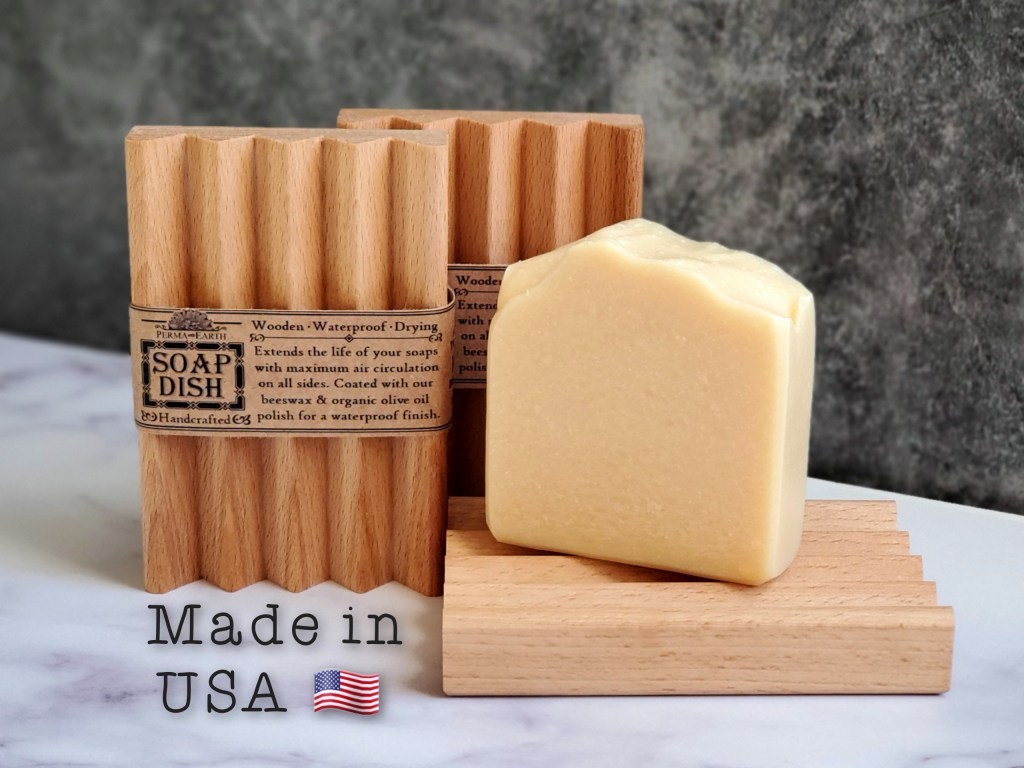
you know the picture of those soap trays in the last pic, you used to sell those like 2018, I can no longer find on your site. will you be stocking them again or do you recommend specific type?
We do still sell them! You can find them in the accessories category in our shop 🙂
Is there a reason, the bar soap can’t be shaved down and added to a liquid to make a liquid soap at home with the bar? So if someone had a reusable pump and bottle, could they not follow a similar process as you recommend for your conditioner bar to make a pumpable shampoo?
Hi Alexis! It may separate, not lather well, or not have many nutrients left like I described above. You would be using heat to help melt down the soap as dissolving it would take quite a while, maybe needing a blender too. I just do not recommend it for best results 🙂